

Transforming Lead Generation with Intelligent Automation
In the world of lead generation, manual data entry often becomes a bottleneck. Sales teams spend countless hours tediously entering information, only to encounter data errors that can cost businesses potential clients. The frustration of these repetitive tasks not only slows down the sales process but also increases the risk of missing out on valuable opportunities. This is where the Intelligent Lead Capture Pipeline makes a difference. By automating the lead capture process, businesses can minimize errors and free up their sales teams to focus on building relationships and closing deals.
The Intelligent Lead Capture Pipeline leverages AI to streamline the lead generation process. It captures data accurately and efficiently, reducing the time spent on manual tasks. This means sales teams can now allocate more time to strategic activities that directly contribute to revenue growth. The result? Faster lead processing, fewer errors, and an overall increase in sales potential.
Understanding Intelligent Lead Capture Pipelines
Manual lead capture is fraught with challenges, from costly errors in data entry to significant time wasted on administrative tasks. Sales teams often find themselves bogged down by repetitive processes that divert focus from strategic activities. This inefficiency not only delays response times but also risks losing potential customers to competitors who can engage more swiftly. To tackle these issues, organizations need a streamlined approach that minimizes errors and optimizes workforce productivity.
Geek At Your Spot specializes in transforming traditional lead capture processes into Intelligent Lead Capture Pipelines. By harnessing AI, businesses can automate and enhance lead capture, reducing manual intervention and improving data accuracy. This transformation enables teams to focus on nurturing leads rather than being stuck in the weeds of data entry.
- Accelerated deployment of AI tools for faster results.
- Tailored data model design to suit specific business needs.
- Workflow configuration to ensure seamless integration into existing processes.
The Role of AI in AP Automation
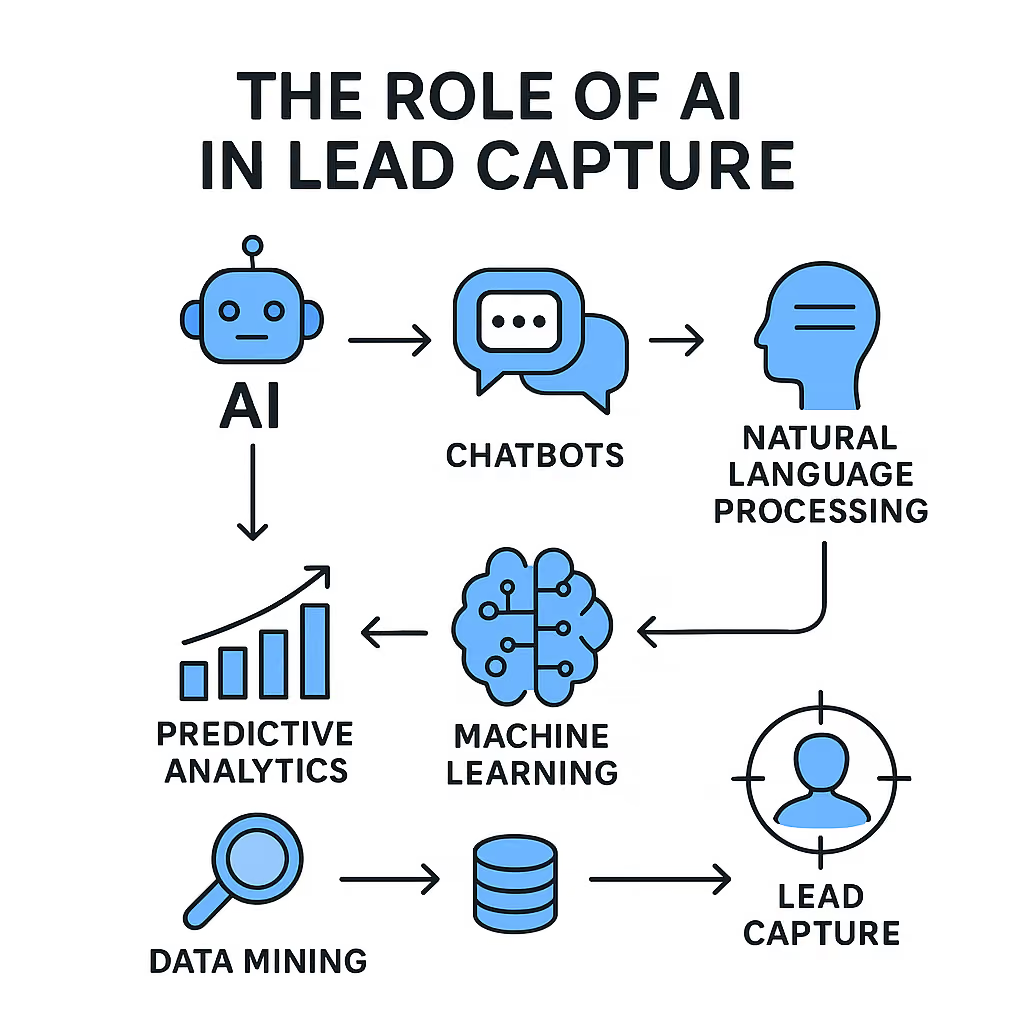
Artificial intelligence plays a pivotal role in transforming the accounts payable landscape. By employing machine learningalgorithms, AI systems can accurately categorize and process invoices, reducing the need for manual intervention. This technology enables the automatic extraction of data, matching invoices with purchase orders, and even predicting payment times based on historical data. At Geek At Your Spot, we ensure that AI is not just a tool but a strategic asset that aligns with our clients' business objectives.
In a hypothetical scenario, a mid-sized retailer using AI-driven AP automation might experience a 40% reduction in invoice processing time, leading to faster payment cycles and improved vendor relationships. Our consultancy works closely with such clients to design and implement AI models that address specific operational challenges and drive measurable results.
Integration with Existing Systems
A critical aspect of successful AP automation is the integration of new technologies with existing enterprise resource planning (ERP) systems. This step is essential to ensure that data flows seamlessly across platforms, maintaining consistency and accuracy. Geek At Your Spot excels in configuring integrations that preserve the integrity of financial data while enhancing the overall system functionality.
- Assessing current system capabilities and identifying integration points
- Customizing APIs for seamless data exchange
- Ensuring data security and compliance with industry standards
By focusing on these integration aspects, our consultancy helps clients achieve a unified and responsive AP environment that supports their broader financial goals.
Change Management and User Adoption
Transitioning to automated accounts payable systems requires careful change management to ensure user adoption and minimize disruption. Geek At Your Spot provides comprehensive training programs tailored to different user groups within an organization. Our change management strategies focus on clear communication, stakeholder engagement, and continuous support to facilitate a smooth transition.
In implementing AP automation, it is vital to address potential resistance by demonstrating the tangible benefits of automation, such as time savings and error reduction. Through workshops and training sessions, we empower users to harness the full capabilities of the new systems, fostering a culture of innovation and efficiency.
Benefits of Implementing AI in Lead Capture
Manual lead capture processes are often fraught with errors and inefficiencies that can cost businesses time and potential revenue. Mistakes in data entry or delayed follow-ups can mean losing leads to competitors. Companies may also find their sales teams overwhelmed by the volume of unqualified leads, leading to wasted effort and frustration. Implementing AI can address these pain points, offering more precise and efficient lead capture.
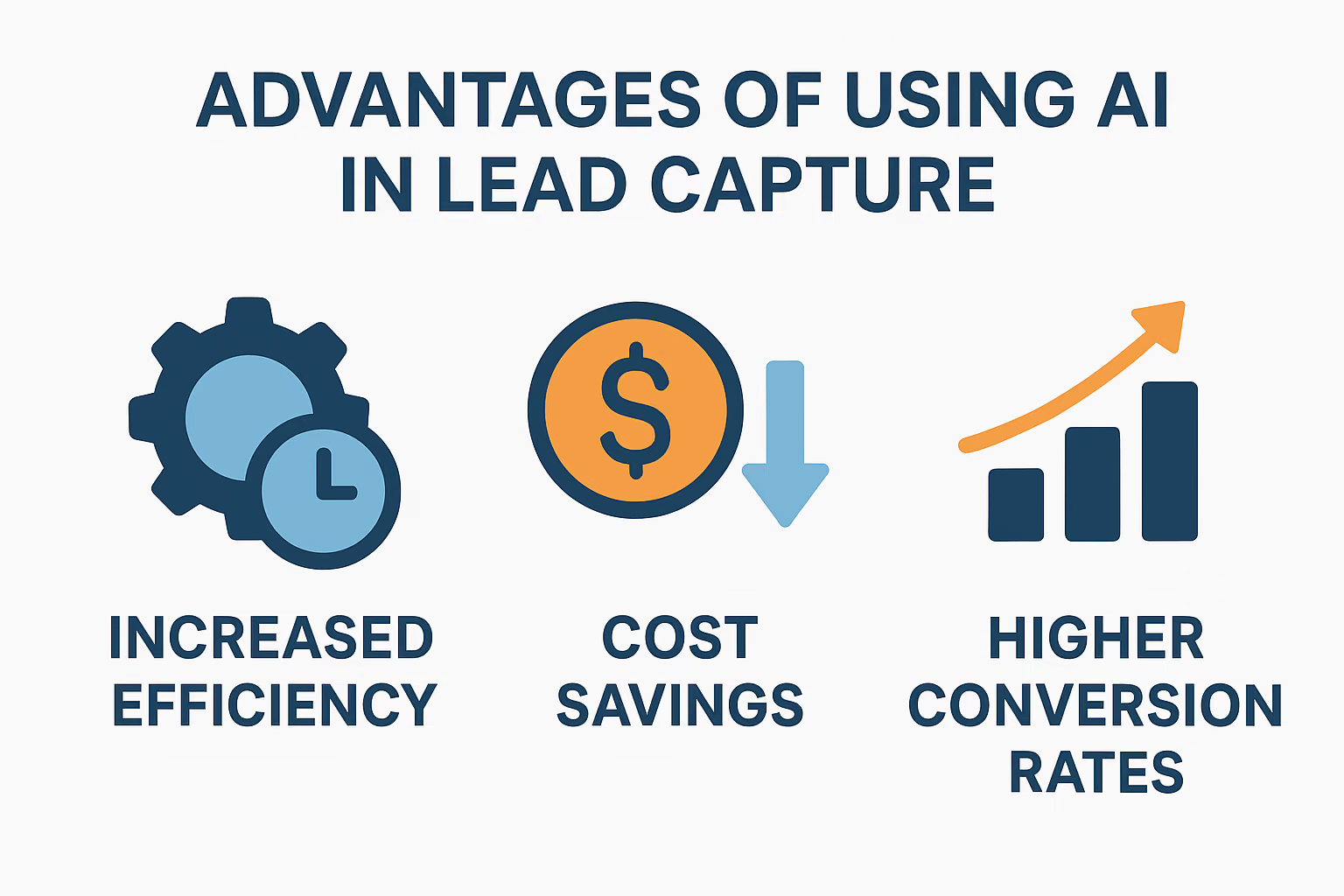
- Data entry reallocation: AI automates data capture, allowing sales teams to focus on engaging with leads rather than inputting data.
- Error reduction: Automated validation ensures lead information is accurate from the start, minimizing costly follow-up corrections.
- Faster response times: AI-driven notifications alert sales reps to new leads instantly, enabling quicker follow-ups and reducing lead drop-off risk.
- Prioritized leads: AI tools can rank leads based on predefined criteria, ensuring that sales teams prioritize high-potential opportunities.
- Increased conversion rates: In a hypothetical mid-sized tech firm, AI-led improvements in lead quality and speed of response led to a 20% increase in conversion rates.
Geek At Your Spot, as an AI implementation consultancy, plays a crucial role in ensuring these benefits are realized. By designing a robust data model, they enable businesses to map customer information accurately, which is essential for personalized lead nurturing. Their expertise in workflow configuration helps automate approval chains and routing, making sure that leads are assigned to the right sales reps promptly.
Integration is another area where Geek At Your Spot excels. They connect different business systems so that AI tools can access necessary data without hiccups, ensuring a seamless flow from lead capture to sales conversion. Furthermore, they assist with change management, guiding teams through the transition and promoting widespread adoption of the new technology.
Ultimately, the implementation of AI in lead capture not only streamlines operations but also empowers sales teams to perform their roles more effectively. By reducing manual workload, correcting data issues at the source, and ensuring a cohesive integration across platforms, Geek At Your Spot enables businesses to drive more qualified leads through their pipelines, resulting in increased sales and reduced operational costs.
Optimizing Data Models for Better Lead Capture
Correctly mapping data models is foundational to effective AI implementation. Misaligned data can lead to incorrect insights and poor lead handling. Geek At Your Spot focuses on designing data models that reflect the unique customer journey of each client. This ensures that AI tools have access to relevant and accurate data, allowing for more personalized interactions.
- Align customer data fields with AI input requirements.
- Integrate data sources to provide a comprehensive view of leads.
- Use feedback loops to continuously refine data accuracy.
Streamlining Workflow Configuration
Workflow configuration is critical to maximize the benefits of AI in lead capture. Without it, sales teams may continue to face bottlenecks or miscommunication. Geek At Your Spot configures workflows to automate lead assignments and approval processes, ensuring that every lead is handled efficiently and by the right team member.
- Automate lead routing based on predefined criteria.
- Set up automated alerts for lead follow-ups.
- Implement approval workflows to streamline lead qualification.
Optimizing Pipeline Performance for Better Results
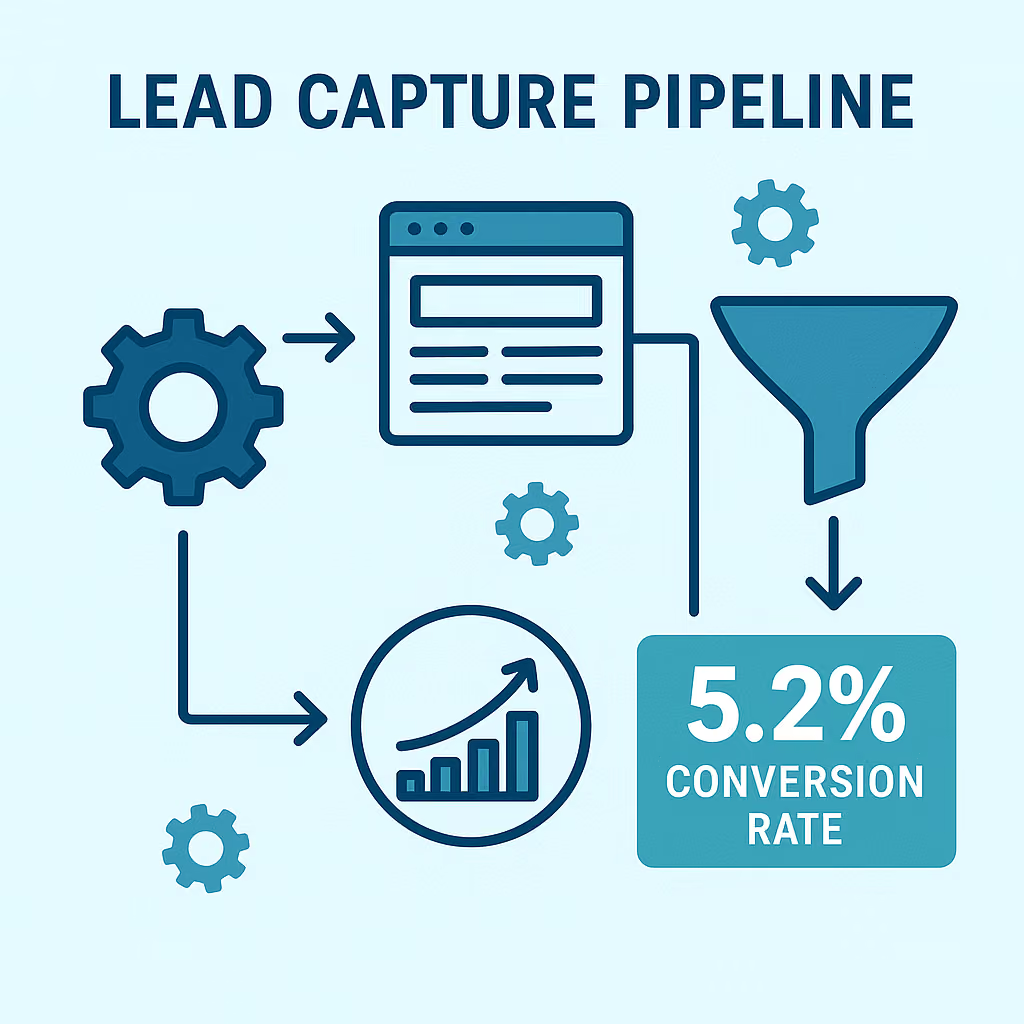
Businesses often face the challenge of inefficient lead processing, which can result in missed opportunities and increased overhead. A common problem is the bottleneck created by manual data entry, where errors and delays occur, causing potential leads to slip through the cracks. This inefficiency not only wastes valuable resources but also slows down the entire sales process, affecting the bottom line. To overcome these hurdles, it's crucial to optimize your lead capture pipeline with intelligent automation.
Geek At Your Spot, an AI implementation consultancy, helps companies enhance their lead capture systems by tailoring AI solutions to fit specific organizational needs. This involves identifying and eliminating inefficiencies in the current pipeline, ensuring a smoother flow from initial contact to conversion. Let's explore how optimization can be achieved through strategic interventions.
- Custom Workflow Configuration: Design workflows that automate repetitive tasks, reducing manual errors and freeing up sales teams to focus on higher-value activities.
- Data Model Design: Improve data accuracy by structuring information in a way that aligns with your business goals, facilitating better decision-making.
- Accelerated Deployment: Implement AI tools quickly to minimize disruption and start seeing results sooner, providing a competitive edge.
Custom Workflow Configuration
One of the key strategies in optimizing pipeline performance is configuring workflows to automate mundane tasks. Manual data entry and lead nurturing can eat up valuable time, leading to slower responses and decreased engagement rates. By deploying automation, businesses can ensure that tasks like follow-ups and data updates happen seamlessly, reducing human error and improving consistency.
Geek At Your Spot provides custom workflow solutions that are aligned with your company's unique processes. These workflows are designed to integrate with existing systems, ensuring a cohesive operation that requires minimal adjustment from your team. This not only streamlines operations but also significantly improves the speed and accuracy of lead processing.
Data Model Design
A well-structured data model is essential for optimizing pipeline performance. Poorly organized data can lead to misinformed decisions and missed opportunities. By designing data models that accurately reflect business priorities, companies can enhance their analytical capabilities and improve lead qualification processes.
Geek At Your Spot works with businesses to create data models that capture the right metrics, making it easier to analyze trends and predict future outcomes. This approach helps in aligning data management with strategic objectives, ensuring that every piece of information collected serves a purpose.
Accelerated Deployment
In the fast-paced business world, time is of the essence. Delays in deploying new systems can result in lost competitive advantages. Accelerated deployment of AI tools ensures that businesses can quickly adapt to market changes and stay ahead of competitors.
Geek At Your Spot enables rapid implementation of AI solutions, minimizing downtime and disruption. This swift deployment allows companies to immediately start benefiting from automated processes, reducing lead processing time and improving overall efficiency.
Geek At Your Spot assists clients in designing these workflows by mapping out existing processes and identifying opportunities for optimization. By configuring the system to align with the organization's unique approval requirements, clients can achieve a hypothetical 40% reduction in processing times, as seen in representative scenarios.
Integration and Scalability
Integration with existing enterprise resource planning (ERP) systems and scalability to accommodate growth are critical features for any AP automation solution. Seamless integration ensures that data flows smoothly between different systems, eliminating the need for duplicate data entry and reducing the risk of inconsistencies.
Geek At Your Spot employs a comprehensive approach to integration, ensuring that AP automation systems are compatible with clients ' existing technology stacks. Additionally, we focus on creating scalable solutions that can grow as the organization expands, providing long-term value and flexibility.
Top AI Tools for Lead Generation and Management
HubSpot
HubSpot is a powerful platform that streamlines lead management by automating repetitive tasks and providing insightful analytics. For businesses struggling with manual lead tracking, HubSpot offers a cohesive approach that integrates contacts, marketing, and sales into one seamless system. This reduces human error and frees up valuable time for teams to focus on nurturing relationships and closing deals.
- Automated workflows streamline lead nurturing by setting up triggers and sequences.
- Real-time analytics provide insights into lead behavior and engagement.
- Integrates with email marketing for cohesive communication strategies.
How an AI implementer helps with HubSpot
Accelerated deployment in HubSpot focuses on quickly setting up the platform with pre-configured templates and workflows, reducing time-to-value. Data model design involves mapping out the interaction between leads, contacts, and deals, ensuring efficient data flow and fewer errors. Workflow and process configuration in HubSpot includes setting up automated sequences for approvals and lead scoring, optimizing the sales funnel. While HubSpot does not support custom code development directly, it allows for the use of APIs to extend functionality, enabling more tailored integrations. These efforts lead to faster go-live, a more stable platform, and ready-to-use automation.
Salesforce Einstein
Salesforce Einstein integrates AI directly into Salesforce, helping businesses automate and optimize customer interactions. It enhances CRM by providing smarter insights, predictive analytics, and personalized recommendations, making it easier to convert leads into sales.
- Automatic lead scoring to identify the most promising prospects.
- Predictive analytics to forecast sales outcomes and guide decision-making.
- AI-driven recommendations for next-best actions to improve customer engagement.
How an AI implementer helps with Salesforce Einstein
An AI implementer accelerates deployment of Salesforce Einstein by setting up pre-configured solutions and best practices, reducing time-to-value. They design data models that effectively map and structure CRM data for optimized AI processing, leading to fewer failed pilots. Implementers configure key workflows in Salesforce Einstein, such as approval chains and automation rules, ensuring production-ready automation. If customization is needed, they extend capabilities using Salesforce's native development tools, such as Apex or Lightning Web Components, to tailor the platform to specific business needs.
Pardot
Pardot is a marketing automation tool that helps businesses streamline lead generation and management processes. It simplifies capturing leads, nurturing them, and converting them into sales, reducing the manual work involved.
- Automated lead scoring to prioritize high-quality leads quickly.
- Advanced segmentation to target specific audiences with precision.
- Real-time analytics to track the performance of marketing campaigns.
How an AI implementer helps with Pardot
An AI implementer accelerates Pardot deployment by setting up pre-configured templates and integrations that cut down the time to go live. They design a Pardot-specific data model that ensures accurate mapping between leads and their attributes, preventing data silos. For workflow configuration, they implement complex approval chains and automation rules that align with your business processes. Although Pardot does not support custom code development like some platforms, an AI implementer can still optimize existing features to meet unique business needs, leading to a faster realization of benefits and fewer failed pilots.
Marketo Engage
Marketo Engage transforms how businesses manage marketing automation and customer engagement. It offers tools for precise campaign execution, lead management, and personalization to enhance customer experiences. By automating and optimizing these processes, Marketo Engage helps businesses efficiently capture and nurture leads.
- Automate email campaigns and lead nurturing processes to maintain consistent communication with prospects.
- Segment audiences based on behavior and interests for targeted engagement.
- Track and analyze customer interactions across multiple touchpoints for actionable insights.
How an AI implementer helps with Marketo Engage
Accelerated deployment with Marketo Engage involves speeding up the setup of automated campaigns and workflows, reducing time-to-value. Expert data model design ensures that lead data is structured to maximize insight and engagement potential. Configuring workflows in Marketo Engage includes setting up automated routing rules and approval processes tailored to specific campaigns. While Marketo Engage does not provide a custom code layer, the platform's extensive API support allows for tailored integrations and data synchronization. With these measures, businesses see fewer failed pilots and can achieve production-ready automation more swiftly.
Zoho CRM
Zoho CRM offers businesses a comprehensive tool to manage customer relationships, streamline sales processes, and enhance lead generation efforts. By using Zoho CRM, teams can automate repetitive tasks, reduce manual data entry errors, and provide a more personalized customer experience. This platform is designed to help businesses boost sales efficiency and improve customer satisfaction.
- Automated workflows streamline tasks like lead assignment and follow-ups, saving time and reducing errors.
- Customizable dashboards and reports provide insights into sales performance and customer interactions.
- Integration capabilities with popular tools like Slack and Google Workspace enhance collaboration and communication.
How an AI implementer helps with Zoho CRM
An AI implementer accelerates the deployment of Zoho CRM by ensuring seamless data migration and system integration, reducing the time to go-live. They design a data model that accurately reflects the client's business needs, optimizing the CRM's data structure for best performance. Implementers also configure Zoho CRM's workflows and automation logic, such as lead routing and approval processes, to ensure efficient operations. For businesses needing specific capabilities, implementers can develop custom functions using Zoho's scripting language, allowing for tailored solutions. These actions help achieve faster time-to-value, fewer implementation setbacks, and robust, production-ready CRM systems.
People Also Ask
How to build a lead pipeline?
Building a lead pipeline involves identifying potential customers and nurturing them until they are ready to buy. First, define your target audience. Then, use marketing strategies like content marketing, social media, and email campaigns to attract interest. Capture contact information using lead forms and engage leads with personalized follow-ups.
How to create a lead capture form?
To create a lead capture form, start by deciding what information you need from potential leads, such as name and email. Use a simple design to avoid overwhelming users. Ensure the form is easy to find on your website and consider offering an incentive for filling it out, like a free eBook or discount.
How to develop a pipeline?
Developing a pipeline involves setting up processes for moving leads through different stages until they are ready to purchase. Start by mapping out each stage of your sales process. Then, use CRM tools to track lead progress and automate communication. Regularly review and refine the pipeline to improve conversion rates.
What is the lead capture process?
The lead capture process involves attracting potential customers and collecting their information for follow-up. It typically starts with generating interest through marketing efforts, then capturing details via forms or landing pages. The information is then used to nurture leads until they are ready to make a purchase.
How to build a good pipeline?
To build a good pipeline, ensure it is structured and scalable. Identify key stages from lead awareness to sale closure, and use CRM software to manage and track leads. Regularly analyze the pipeline's performance to identify bottlenecks and optimize for efficiency.
What are the 5 stages of a sales pipeline?
The 5 stages of a sales pipeline often include: 1) Lead Generation - attracting potential customers, 2) Lead Qualification - assessing if leads fit your criteria, 3) Proposal - presenting your offering, 4) Negotiation - discussing terms, and 5) Closing - finalizing the sale.
What are the 5 stages of pipeline?
The 5 stages of a pipeline generally refer to stages in a process, which can include: 1) Prospecting, 2) Initial Contact, 3) Qualification, 4) Proposal, and 5) Closing. Each stage represents a step in moving a lead from initial interest to a completed transaction.
What is a lead pipeline?
A lead pipeline is a structured process used by businesses to track and manage potential customers as they move through the sales process. It helps in organizing leads, ensuring follow-up, and increasing the likelihood of converting them into paying customers.
What are the three types of pipelines?
The three main types of pipelines include: 1) Sales Pipelines, which track potential sales opportunities, 2) Marketing Pipelines, which manage leads generated through marketing efforts, and 3) Project Pipelines, which oversee the flow of tasks and projects within an organization.
How to design a pipeline system?
Designing a pipeline system requires identifying the key stages and processes your organization needs to track. Map out each stage and define the criteria for moving leads through the stages. Use software tools to automate and monitor the pipeline, ensuring data is consistently updated and accessible.
What is the formula for pipeline?
The formula for a sales pipeline typically involves calculating the value of potential sales at each stage of the pipeline. This is often done by multiplying the probability of closing a deal at each stage by the deal's expected value, helping to forecast potential revenue.
How to develop a project pipeline
To develop a project pipeline, start by outlining the key phases of project development, such as planning, execution, and completion. Use project management tools to track progress and allocate resources. Regularly review the pipeline to ensure projects are on track and adjust plans as needed.